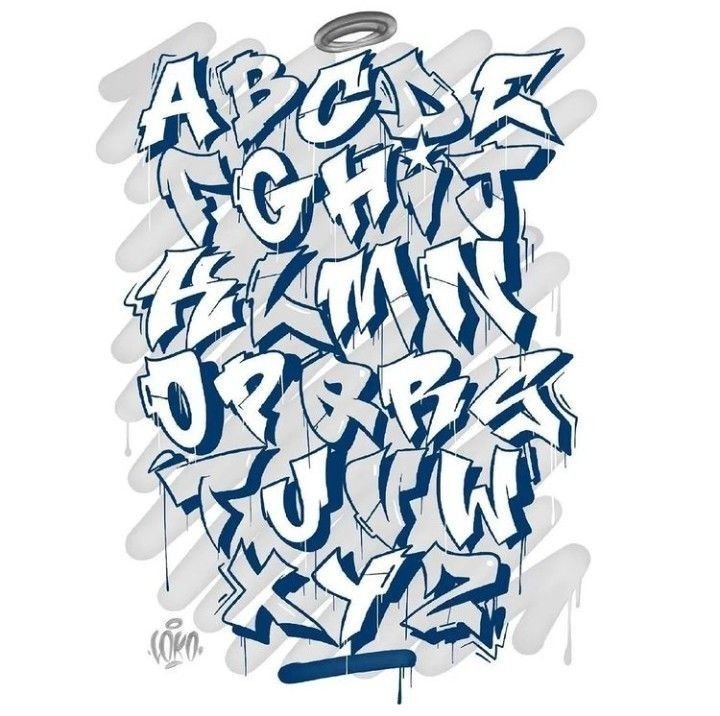
Graffiti lettering, at its heart, is a vibrant language, a powerful form of urban expression that transforms mere alphabetic characters into dynamic works of art. Far from being a simple scribble, mastering advanced graffiti lettering techniques and manual design demands a deep understanding of letter anatomy, an intuitive grasp of flow, and a masterful command of visual effects. It's about taking the foundational alphabet and bending, breaking, and embellishing it until it pulses with life, speaking volumes without uttering a single word.
This guide is your deep dive into the sophisticated world of graffiti letter design, moving beyond basic tags to explore the intricate artistry that defines true mastery. We'll unpack the secrets behind stunning 3D illusions, the controlled chaos of Wildstyle, and the strategic power of color, all while equipping you with actionable steps to elevate your craft.
At a Glance: Your Guide to Advanced Graffiti Lettering
- Understand Letter Anatomy: Learn the building blocks—strokes, loops, terminals—to deconstruct and reconstruct letters creatively.
- Demystify Wildstyle: Master complex interlocking letters, intricate embellishments, and the balance between readability and abstraction.
- Command 3D Effects: Discover how light, shadow, and perspective create breathtaking depth and volume.
- Harness Color & Shading: Utilize color theory, gradients, and contrasting tones to evoke emotion and enhance dimension.
- Cultivate Flow & Composition: Learn to arrange elements harmoniously, guiding the viewer's eye through dynamic movement.
- Refine Your Unique Style: Develop a personal aesthetic through consistent practice, experimentation, and critical feedback.
- Choose the Right Tools: Select appropriate mediums, from traditional spray paint to modern digital design software.
The Canvas of the City: Understanding Graffiti's Core
Before we twist letters into gravity-defying shapes or drench them in vibrant hues, it's crucial to appreciate the bedrock of graffiti. At its core, it's about manipulating the alphabet, transforming functional symbols into a visual feast. Think of letter anatomy—ascenders reaching skyward, descenders dipping below the baseline, the subtle serifs that might become razor-sharp spikes—as your foundational vocabulary. Understanding these elements isn't just academic; it's the secret to knowing how to innovate, to push boundaries while maintaining a cohesive, recognizable form.
This art form is deeply rooted in street culture, often serving as a community voice, a statement etched into the urban landscape. This cultural context means that every line, every color choice, and every deliberate placement can convey a message, a feeling, or a shared identity. For advanced artists, this awareness enhances innovation, allowing you to imbue your letters with narrative and resonance.
Beyond the Basics: Deconstructing Advanced Lettering Styles
Moving past simple block letters or bubble letters, the world of advanced graffiti opens up a spectrum of intricate possibilities. Each technique builds on foundational understanding, pushing your creative limits and challenging your manual design skills.
Wildstyle: The Art of Controlled Chaos
Imagine letters caught in a whirlwind, interlocking and entwining, adorned with arrows that slice through space and spikes that jab at the edges of readability. This is Wildstyle: an intricate, visually captivating form characterized by complex interlocking letters and elaborate embellishments. It’s a dance between form and chaos, demanding a keen understanding of letterforms and how to manipulate them for a cohesive yet energetic visual experience.
Mastering Wildstyle isn't about throwing random elements together. It’s about creating a powerful sense of movement and energy through careful design. The process typically begins with sketching designs on paper. This crucial step allows you to experiment freely with how letters connect, overlap, and distort, ensuring that even amidst the abstraction, a discernible structure remains. You'll play with dynamic shapes, negative space, and a myriad of embellishments to balance readability with a compelling aesthetic. Think of it as choreographing a complex ballet for your letters, where every twist and turn serves a purpose.
Mastering the Illusion: 3D Effects and Perspective
To truly make your letters pop off the wall, you need to master 3D effects. This isn't just about adding a drop shadow; it's about dramatically enhancing depth and dimension through a sophisticated understanding of shading and perspective. The goal is to create illusions that make flat surfaces appear to have tangible volume.
The key lies in understanding light sources. Just as in real life, light defines form. By determining where your light source is coming from, you can strategically apply highlights—lighter colors, often white—to the surfaces closest to the light, and shadows—darker shades, often black—to the surfaces receding away. This contrast creates the illusion of volume. Experimenting with angles and perspectives is also crucial. Tilting letters, using converging lines that lead to a vanishing point, or exaggerating certain dimensions can make your letters appear to recede into the distance or aggressively jump forward, adding dynamic energy to your manual design.
The Power of Palette: Color Theory and Shading for Impact
Color is far more than just decoration in advanced graffiti lettering; it's pivotal for expression, mood, and visibility. Your choice of colors can evoke specific emotions—bright, fiery tones for energy, softer, cooler hues for calmness—and convey subtle messages.
Understanding basic color theory is essential for harmonious compositions. Explore complementary schemes (colors opposite each other on the color wheel, like blue and orange, for high contrast and vibrancy) or analogous schemes (colors next to each other, like blue, teal, and green, for a smoother, more unified feel). Shading, through gradients and varying tones, is where color truly comes alive. Seamlessly blending one color into another creates smooth transitions and adds depth. Conversely, using strong contrasts, like a vibrant yellow outline against a deep purple fill, can make elements aggressively pop, drawing the eye precisely where you want it. This interplay of color and shadow is where your manual design truly transcends the two-dimensional.
Orchestrating Movement: Flow and Composition in Wildstyle
In the intricate world of Wildstyle, "flow" refers to the rhythm and movement created by the interaction of your letters and embellishments. It’s the invisible current that allows a viewer's eye to glide smoothly across your piece, rather than getting snagged on disjointed elements. Think of how a choreographer designs a dance; each step leads naturally to the next, creating an unbroken sequence.
Composition, on the other hand, involves the overall layout of your piece. It encompasses balance (distributing visual weight evenly), symmetry (or deliberate asymmetry for tension), and focal points (areas designed to immediately capture attention). Achieving harmonious composition in Wildstyle is particularly challenging due to its inherent intricacy. It often involves extensive experimentation with letter arrangements and a smart use of negative space. Strategic gaps or open areas provide visual breathing room, preventing the piece from becoming overwhelmingly dense and allowing the complex letterforms to truly shine.
The Signature: Evolving Your Tag
While often seen as a basic element, tagging is a deeply personal form of graffiti that, at an advanced level, becomes an art in itself. It’s not just writing your name; it’s stylizing your alias into a unique, recognizable brand. Advanced techniques involve experimenting with an array of tools—from fat-cap spray paint to fine-point markers or even digital platforms—to achieve specific textures and line weights.
Strategic placement is key for visibility and impact, and incorporating local symbols or cultural motifs can add layers of depth and meaning to your signature. However, as with all forms of street art, artists must also consider the legal implications of their chosen canvases. A truly evolved tag becomes a condensed expression of your entire artistic identity, showcasing your precision, style, and creative voice in its most distilled form. For those looking to quickly visualize and experiment with different styles and effects for their tags or full pieces, a graffiti letters generator can be an invaluable digital tool to explore variations before committing to manual design.
Your Journey to Mastery: Actionable Steps for Development
Mastering advanced graffiti lettering is an ongoing expedition, a blend of tireless practice, sharp observation, and relentless experimentation. Here's a structured path to elevate your manual design skills.
1. Building Blocks: Typography Fundamentals
Before you can break the rules, you need to understand them. Familiarize yourself with the foundational elements of typography:
- Letter Anatomy: Study the various parts of letters (strokes, loops, terminals, x-height, baseline).
- Spacing & Proportion: Understand how the space between letters (kerning) and the overall scale of each letter affects readability and aesthetics.
- Font Styles: Explore different classic font styles to grasp their underlying structures. This knowledge is your secret weapon for abstracting and distorting letters while keeping them visually coherent.
2. Fueling Your Vision: Seeking Inspiration
The world is your gallery. Gather inspiration from a diverse range of sources:
- Renowned Artists: Study the masters of graffiti (both local legends and international icons) and analyze their techniques, color palettes, and unique styles.
- Diverse Styles: Don't limit yourself. Explore traditional Bubble Letters for form, Block Letters for structure, Wildstyle for complexity, and 3D Letters for depth. Each offers insights you can integrate into your own evolving style.
- Beyond Graffiti: Look at calligraphy, graphic design, architecture, and even nature for fresh perspectives on form, flow, and texture.
3. Choosing Your Arsenal: Tools of the Trade
Your tools are an extension of your artistic intent. Select them based on your medium and desired outcome:
- Spray Paint: Essential for street art, offering broad strokes, fades, and textures. Experiment with different cap types (fat caps, skinny caps) for varied effects.
- Markers & Sketchbooks: Indispensable for practice, concept development, and detailed manual design. Experiment with various tip sizes and ink types.
- Digital Tablets & Software: For digital designs, these tools offer precision, undo capabilities, and layers, allowing for rapid iteration and experimentation before physical execution.
4. Blueprint on Paper: Sketching Your Ideas
Never jump straight to the wall. The sketchbook is your laboratory:
- Rough Sketches: Start loosely, focusing on the overall shape, flow, and how letters connect and interact. Don't worry about perfection; explore ideas freely.
- Connection & Flow: Pay attention to how letters transition from one to the next, aiming for a sense of unity and movement.
- Details & Embellishments: Begin adding arrows, stars, drips, or other unique elements, seeing how they enhance or detract from the main letterform.
5. Defining the Edge: Adding Bold Outlines
Outlines are more than just borders; they define the personality and presence of your letters:
- Thick Outlines: Use bold, clean outlines to make your letters stand out and create a strong visual presence.
- Contrast & Layering: Experiment with varying line weights (thick outer lines, thinner inner lines) and layering outlines in different colors for dramatic effects and added depth. This also helps separate intricate elements within Wildstyle.
6. Bringing It to Life: Color, Texture, and Dimension
This is where your letters truly come alive:
- Vibrant Colors: Use a rich palette to evoke specific moods and ensure visibility.
- Gradients: Employ smooth color transitions (e.g., light blue blending into dark blue) for depth and visual interest.
- Patterns & Textures: Incorporate subtle patterns (dots, stripes, checkerboards) or simulated textures (splashes, drips, distressed effects) within your fills to add character and complexity.
- Highlights & Shadows: Crucial for 3D effects. Strategically place highlights (lighter colors) where light would hit and shadows (darker tones) where surfaces recede, creating the illusion of volume and form.
7. Forging Your Mark: Refining a Unique Style
Your goal is to be recognizable without being repetitive. This is an evolutionary process:
- Combine Elements: Take inspiration from various styles and techniques, but filter them through your own aesthetic.
- Continuous Refinement: Don't settle. Constantly evaluate your work, identify areas for improvement, and tweak elements until your personal flair is undeniable. This dedication will lead to a unique and instantly recognizable look.
8. The Grind: Consistent Practice
There are no shortcuts to mastery:
- Dedicated Time: Allocate consistent time each week for sketching, whether it's 30 minutes or several hours. Consistency trumps sporadic bursts of effort.
- Keep a Sketchbook: This is your visual diary, allowing you to track your progress, revisit old ideas, and freely explore new concepts without the pressure of a finished piece. It’s also a powerful tool for self-critique.
9. Growing Through Critique: Seeking Feedback
An outside perspective is invaluable:
- Local Communities: Engage with other artists in your local graffiti scene. Attend jams, share your work, and observe others.
- Online Forums & Social Media: Share your designs online. Be open to constructive criticism and collaborate with fellow artists. Feedback highlights blind spots and offers new avenues for exploration.
10. Breaking Boundaries: Experimentation
The most exciting breakthroughs happen when you dare to try new things:
- New Techniques: Don't be afraid to step outside your comfort zone. Try a different letter structure, a new color combination, or a different medium.
- Push Creative Boundaries: Challenge yourself to interpret letters in novel ways. What if your letters were made of ice? Or smoke? Or intertwining vines? This kind of imaginative thinking will continuously evolve your manual design capabilities.
Common Questions & Pitfalls
Even seasoned artists have questions, and new challenges always emerge. Here are a few common queries and misconceptions:
How long does it take to master graffiti lettering?
Mastery is a lifelong journey, not a destination. While you can achieve proficiency in basic techniques within months with consistent practice, true mastery—developing a unique, highly refined style and command of advanced techniques—can take many years, often a decade or more of dedicated effort and continuous learning.
What's the difference between Wildstyle and Throw-ups?
They represent different ends of the stylistic spectrum. Throw-ups are typically quick, bubbly, and often two-color pieces (fill and outline) designed for speed and repetition, prioritizing visibility and quantity. Wildstyle, conversely, is highly intricate, complex, and time-consuming, focusing on elaborate design, interlocking elements, and a high degree of artistic sophistication, prioritizing quality and unique expression.
Is graffiti art legal?
The legality of graffiti art depends entirely on where and how it is executed. Creating graffiti on private or public property without explicit permission is illegal vandalism and can lead to severe penalties. Many cities have designated legal walls or commissioned mural opportunities where artists can create freely. Always seek permission and understand local laws before painting in public spaces. Your focus on manual design and sketchbook practice is key to developing skills without legal risk.
Beyond the Wall: The Future of Manual Design in Graffiti
While the digital realm offers incredible tools for exploration and conceptualization, the heart of advanced graffiti lettering and manual design remains rooted in the artist's hand. Digital tools, like the aforementioned graffiti letters generator, can complement your skills, offering a sandbox for rapid iteration and testing new ideas. They streamline the process of visualizing concepts before committing them to paper or paint.
However, the enduring value of hand-drawn techniques—the tactile connection to your tools, the nuanced control of a brushstroke or marker, the sheer joy of creating something physical—is irreplaceable. These manual skills form the bedrock of true artistry, regardless of whether your final canvas is a digital screen or a brick wall.
Your Next Canvas: Continuous Evolution
Mastering advanced graffiti lettering techniques and manual design is not a static achievement but a continuous evolution. Every sketch, every finished piece, every critical feedback session is a step forward on a path that blends raw creativity with refined technical skill. Embrace the challenge, stay curious, and let your unique artistic voice resonate through every line, every curve, and every dynamic letter you bring to life. The urban landscape—or even just your sketchbook—awaits your next masterpiece.