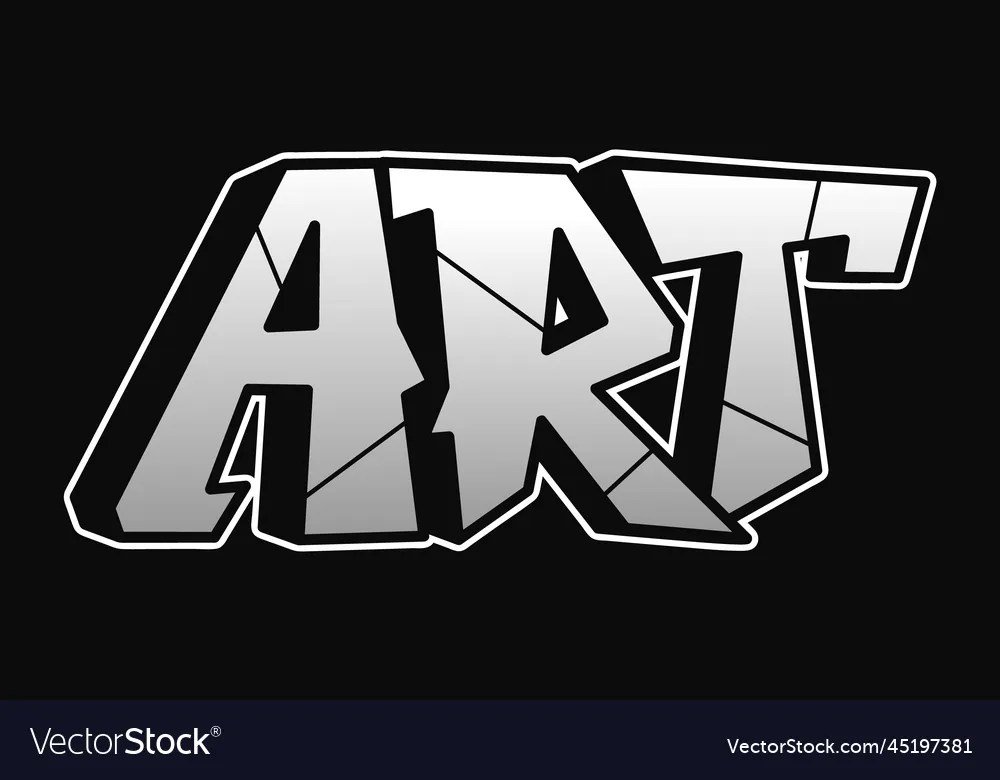
Graffiti letter art isn't just about putting ink or paint to a surface; it's a vibrant dialogue between artist and audience, a powerful declaration of individuality. If you've ever admired a piece of street art and wondered how artists achieve such distinct, captivating lettering, you're looking at the magic of customization and personalization. Mastering the art of customizing and personalizing your graffiti letter art transforms mere letters into a unique visual language, making your work instantly recognizable and deeply impactful. It’s how you move from copying styles to creating your own legacy.
At a Glance: Crafting Your Signature Graffiti Style
- Start with the Basics: Understand classic styles like bubble, block, and wildstyle before deconstructing them.
- Sketch Relentlessly: Paper is your playground. Experiment with shapes, connections, and negative space without commitment.
- Develop Signature Elements: Arrows, drips, extensions, and unique letter quirks are your personal identifiers.
- Master Depth and Dimension: Utilize outlines, 3D effects, shadows, and gradients to make your letters pop.
- Experiment with Color & Texture: Vibrant palettes and subtle patterns breathe life into your designs.
- Seek Feedback: Fresh eyes offer invaluable perspectives for refinement.
- Practice Consistently: Like any skill, repetition is the mother of mastery.
The DNA of Distinctive Lettering: Understanding the Roots
Before you can truly make graffiti letters your own, it helps to understand their powerful lineage and fundamental forms. Born in the urban landscapes of New York City in the late 1960s and early 1970s, graffiti lettering quickly evolved from simple "tags" (like those by pioneer Taki 183) into complex artistic statements. Artists like Phase 2 pushed boundaries, introducing the playful, rounded bubble letters that remain a beginner-friendly staple today. The 1980s saw an explosion of 3D effects and vibrant colors, setting the stage for the intricate Wildstyle and bold Block Letters we recognize.
Understanding these foundational styles—Tags, Bubble Letters, Block Letters, Wildstyle, and 3D Letters—isn't about copying them indefinitely. It's about knowing the rules so you can intelligently break them. Each style offers a different starting point for experimentation, a vocabulary from which you'll draw to construct your own unique dialect.
The Toolkit for Self-Expression
Your journey into personalizing graffiti art begins with the right tools, both physical and digital. For initial concepts, nothing beats paper, pencils, and a sketchbook. These allow for quick iterations and mistakes without consequence. As your ideas solidify, markers and paint pens are excellent for refining outlines and adding color on a smaller scale. For large-scale work, spray paint and various caps are essential, demanding protective gear like gloves and masks. Don't underestimate the power of digital tools either; software like Adobe Illustrator or Procreate, paired with a drawing tablet, offers unparalleled freedom for exploration, undoing mistakes, and experimenting with endless color palettes before you ever touch a wall. Sometimes, even a graffiti letters generator can be a fun way to spark initial ideas or visualize different fonts quickly.
Crafting Your Unique Voice: A Step-by-Step Guide to Personalization
Personalizing your graffiti letter art isn't a single step; it's a journey of discovery and iterative refinement. Here's how to imbue your letters with your distinct style.
1. Master the Foundations, Then Deconstruct Them
Every compelling graffiti piece starts with a strong understanding of letter anatomy. Think about the strokes, loops, and terminals of individual letters, their spacing (kerning), and overall proportions. Start by practicing basic block or bubble letters—these are your foundational building blocks. Once you can consistently render legible and balanced letters in a standard style, you've earned the right to start bending the rules. This foundational knowledge is what allows you to manipulate and distort letters while still retaining their legibility and aesthetic appeal.
2. Seek Inspiration Far and Wide
Don't operate in a vacuum. Gather inspiration from everywhere: the works of renowned graffiti artists like Taki 183, Phase 2, Revok, or even Banksy's precise lettering, but also beyond street art. Look at classical typography, architecture, nature, graphic design, and even everyday objects. What visual elements resonate with you? How do different artists handle flow, negative space, and dimension? Collect these ideas, analyze what makes them unique, and consider how you might adapt their essence into your own lettering style.
3. Sketch, Sketch, and Sketch Again: The Freedom of Iteration
Your sketchbook is your laboratory. Don't skip this crucial phase. Start with rough sketches, letting ideas flow freely. Focus on how letters connect and interact, how they fill the available space, and what overall mood they convey. Begin with basic shapes for your chosen letters, then gradually introduce elements like arrows, stars, or drips. This is where you can truly experiment with different angles, overlaps, and extensions without the pressure of a final piece. Use a graffiti letters generator as a jump-off point for exploring variations, then take those ideas to paper for manual refinement. The goal isn't perfection in the first sketch, but exploration.
4. Inject Your Signature Elements and Flair
This is where your letters truly begin to differentiate themselves. Once your basic letter shapes are in place, start adding those unique characteristics that will become your artistic fingerprint:
- Curves and Angles: Experiment with exaggerated curves or sharp, aggressive angles.
- Arrows and Extensions: Integrate arrows that point, connect, or emphasize movement. Extend letter serifs or terminals in unexpected ways.
- Drips and Splatters: Add controlled drips or splatters that suggest movement or raw energy.
- Breaks and Overlaps: Break the flow of a letter, or intentionally overlap elements to create depth and complexity.
- Connections: How do your letters flow into each other? Do they merge seamlessly, or are there distinct breaks? Developing a consistent way letters interact contributes significantly to your personal style.
Remember, it's about evolving these elements until they feel naturally yours, not just tacked on.
5. Refine Your Flow and Structure
After adding flair, step back and critically evaluate your design. Erase unnecessary lines, smooth out awkward transitions, and ensure there's a harmonious flow between all your letters. Each letter should feel like it belongs, creating a cohesive visual statement. Work on maintaining consistency in size and alignment, even as you introduce dynamic elements. A strong overall structure underpins even the most "wild" styles. If your letters feel disjointed, your personal style won't read as intentional.
6. Master the Power of Outlines and Depth
Outlines are the backbone of impactful graffiti letters. Use thick, bold outlines to make your letters stand out from the background and from each other. Experiment with contrast: a thick outer outline combined with thinner inner lines can create incredible visual tension. Layering multiple outlines, perhaps in contrasting colors, adds dramatic depth and a professional finish. This technique alone can transform a flat design into something that truly pops.
For even more impact, dive into 3D effects. This involves creating the illusion of depth and perspective, making your letters seem to jump off the page or wall. Achieve this by:
- Shadowing: Consistent light source and shadow placement are key.
- Grayscale Variations: Using lighter shades for highlighted areas and darker shades for recessed parts of the letters.
- Perspective: Making parts of letters appear closer or further away.
These elements require practice, but they add an incredible layer of sophistication to your personalized style.
7. Unleash Color and Texture: The Emotional Canvas
Color is profoundly personal and can dramatically alter the mood and impact of your lettering.
- Vibrant Palettes: Don't shy away from bold, clashing colors if that's your aesthetic. Experiment with color theory – complementary colors for vibrancy, analogous for harmony.
- Gradients: Seamlessly blend colors within your letters to create smooth transitions and a sense of movement or light. This is particularly effective for 3D effects.
- Patterns and Textures: Incorporate subtle (or not-so-subtle) patterns like dots, stripes, or splashes within your letters. Think about how a brick texture or a metallic sheen could be rendered. Highlights and shadows, combined with carefully chosen textures, further enhance the illusion of depth.
- Fills: Move beyond solid fills. Explore abstract patterns, character integrations, or intricate designs within the letters themselves.
Developing a signature color palette is a powerful way to personalize your art. Take a look at different styles from a graffiti letters generator to see how various color schemes impact their feel.
8. Develop Your Signature Finish
Your personal style is a combination of all the above. It's the unique blend of shapes, movements, colors, and textures that becomes instantly recognizable as your handiwork. This doesn't happen overnight. It's an ongoing process of combining elements from different styles you admire, adding your own creative twists, and constantly refining. Think of it as developing a unique artistic accent. Consistent practice will hone this voice, making it stronger and more articulate over time.
Mastering the Craft: Essential Tips for Ongoing Growth
Even the most seasoned artists are constantly learning. Here's how to continue pushing your personal style forward.
Practice, Practice, Practice
There's no shortcut to mastery. Consistent, dedicated practice is the single most important factor in improving your graffiti letter art and solidifying your personal style. Regularly sketching, experimenting, and executing pieces will refine your hand and eye.
Seek and Embrace Feedback
Share your work. Connect with other graffiti artists, both online and in person. Constructive criticism is a powerful tool for growth. Fresh eyes can spot areas for improvement you might overlook, helping you refine your flow, balance, or unique elements.
Don't Be Afraid to Experiment
Push creative boundaries. Try new techniques, materials, or unconventional letter forms. What happens if you invert a letter? What if you use only two colors? What if you draw with your non-dominant hand? Sometimes the greatest breakthroughs come from stepping outside your comfort zone.
Use References, But Don't Copy Blindly
Look at local graffiti, explore online portfolios, and study different typographic styles. Use these as springboards for ideas, but always filter them through your own creative lens. The goal is to be inspired, not to replicate.
Play with Color, Always
Keep a keen eye on how different vibrant combinations interact. Color can evoke emotion, guide the eye, and add dynamic energy. Don't be afraid to try combinations that seem unusual – they might just unlock a new signature aspect of your work.
Ensure Seamless Flow
Continuously work on ensuring your letters are consistent in size, weight, and flow naturally together. Even complex Wildstyle pieces have an underlying rhythm and coherence. A unified flow is crucial for a polished, professional look. A quick check with a graffiti letters generator can sometimes help you visualize different letter relationships before committing to your sketch.
Prioritize Safety and Respect
When working with spray paint, always wear protective gear (gloves, masks) in well-ventilated areas. More importantly, always seek legal spaces for your art. Respect for property and community is paramount; responsible practice ensures the longevity and positive perception of graffiti as an art form.
Why Your Unique Graffiti Letters Matter
Graffiti letters are far more than just writing on a wall; they are a vital form of communication and identity in urban art. They allow artists to:
- Express Creativity: Providing an unlimited canvas for imagination.
- Tell Stories: Whether personal narratives, social commentary, or abstract emotions.
- Beautify Urban Spaces: Transforming drab, overlooked areas into vibrant galleries.
- Forge Identity: Your unique style becomes your signature, a recognizable mark in the visual world.
Artists like Banksy, while known for stencils, often incorporate precise and creative lettering that serves to amplify their message, proving the power of a distinct letterform. Revok is celebrated precisely for his innovative and bold letter designs that instantly identify his work. Your personalized graffiti letters contribute to this rich tapestry, adding your distinct voice to the ongoing conversation of urban art.
Common Pitfalls to Sidestep
As you personalize your style, be mindful of these common mistakes:
- Skipping the Sketch Phase: Rushing directly to final execution often leads to unbalanced, unrefined work.
- Overcrowding Letters: Without enough space, letters lose their individuality and become illegible.
- Inconsistent Styles: Mixing too many disparate styles within a single design without a clear intention can make a piece look chaotic rather than cohesive.
- Rushing the Process: Art, especially personalized art, takes time. Embrace the journey of creation and refinement.
Beyond the Canvas: The Continuous Evolution of Your Style
Developing a truly unique and personalized graffiti letter style is an ongoing journey, not a destination. Your style will—and should—evolve as you grow as an artist, as you encounter new inspirations, and as you push your own creative boundaries. The tips provided here are merely starting points. The true personalization comes from within, from your willingness to experiment, to fail, to learn, and to consistently show up to the page or the wall with a desire to express something truly yours. So grab your tools, embrace the process, and let your letters tell your story.